For decades, climate change was discussed in conferences, policy papers, and sustainability reports. Today, it is showing up in personal preferences, industrial choices, factory production numbers, electricity bills, insurance premiums, and supply chain disruptions.
India experienced one of its hottest periods on record recently. According to Grant Thornton Bharat, heat stress alone is already reducing India’s GDP by an estimated 4%–6% annually through lost productivity, health impacts, and operational disruptions. That number is larger than the annual GDP of many countries.
From being an environmental issue to becoming one of India’s defining economic variables, the perspective on climate change has moved on. This World Environment Day, it is important that industries realize that climate change adaption is one of the most valuable competitive advantages of the next decade. Companies that adapt their operations today will be better positioned to manage costs, protect productivity, reduce risk, and secure long-term growth. Those that delay may find themselves struggling to keep pace with a rapidly changing world.
Let’s explore how industries are tackling climate change.
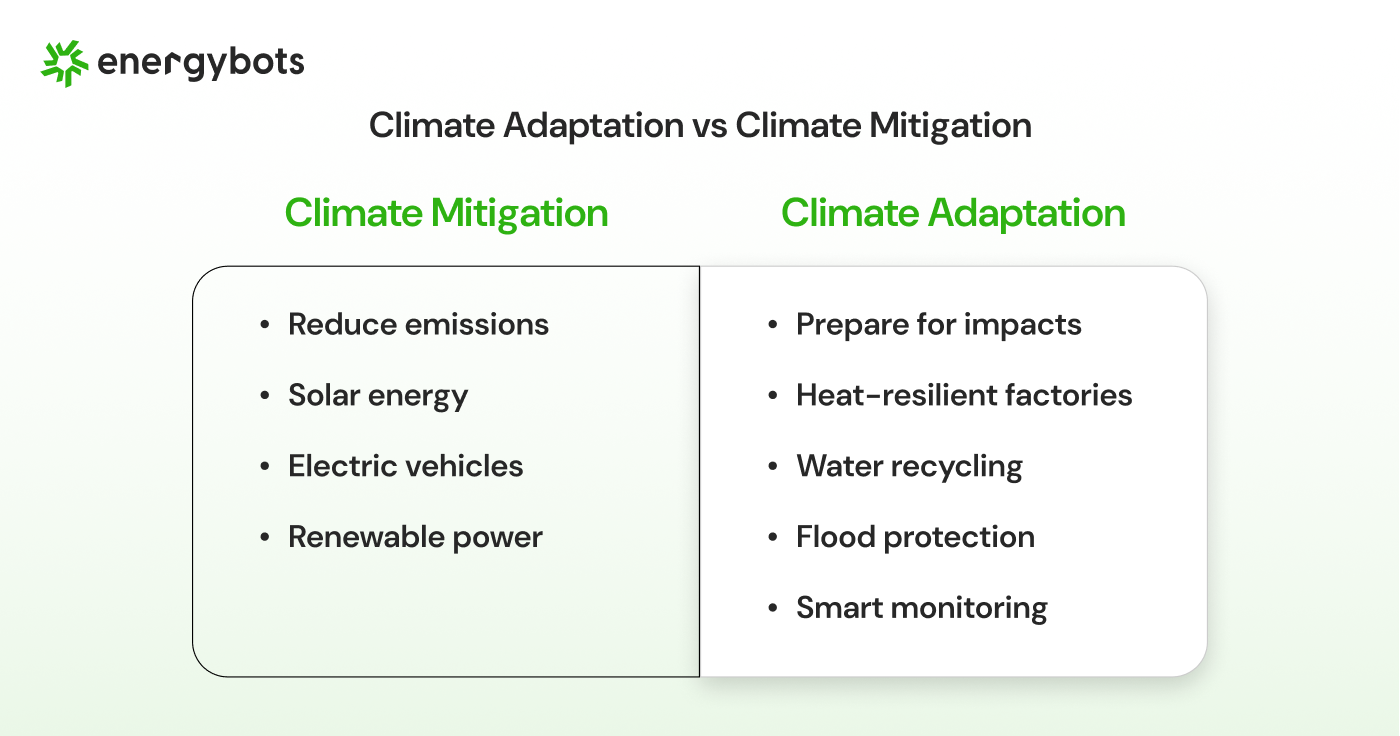
Climate change adaptation means adjusting how you operate, your infrastructure, processes, supply chains, and workforce policies, to reduce vulnerability to climate-related risks. In simple words, it is flood-proofing your factory before the monsoon arrives, not after the water is already on your production floor. It implies adjusting operations, infrastructure, and business strategies to minimize climate change risks.
However, climate change is much more than rising temperatures. It refers to long-term changes in Earth’s temperature, rainfall patterns, wind systems, and weather conditions, largely caused by the increasing concentration of greenhouse gases in the atmosphere. These gases, generated from activities such as burning fossil fuels, industrial production, transportation, and deforestation, trap heat and gradually warm the planet.
Five years ago, sustainability discussions focused on reputation. Today they focus on resilience. From manufacturing plants and automotive factories to textile mills and energy companies, businesses are redesigning operations around climate resilience, industrial sustainability, and industrial decarbonization. Businesses are adapting because climate change is directly affecting margins.
In 2026, major industries are shifting from voluntary sustainability pledges to mandatory, execution-driven adaptation. Companies are treating physical climate risks and resource scarcity as core financial threats, integrating AI-enabled energy systems, circular economy design, and climate-resilient infrastructure to protect operations and maintain a competitive edge.
According to Grant Thornton Bharat, here are some issues being faced by industries, due to climate change:
Beyond immediate disruptions, several structural forces are accelerating climate change adaptation strategies across every major sector: rising energy costs, carbon border taxes on exports to the EU, tightening ESG reporting requirements, and a global customer base that increasingly demands sustainable products. These forces are now a permanent feature of the business landscape. That is a fundamental shift.
The companies investing in climate change adaptation strategies are now preparing themselves for the operating conditions of the next 20 years. They increasingly understand that climate resilience is not about compliance alone. It is about protecting future revenue. Corporate sustainability has evolved from a branding exercise into a business continuity strategy.
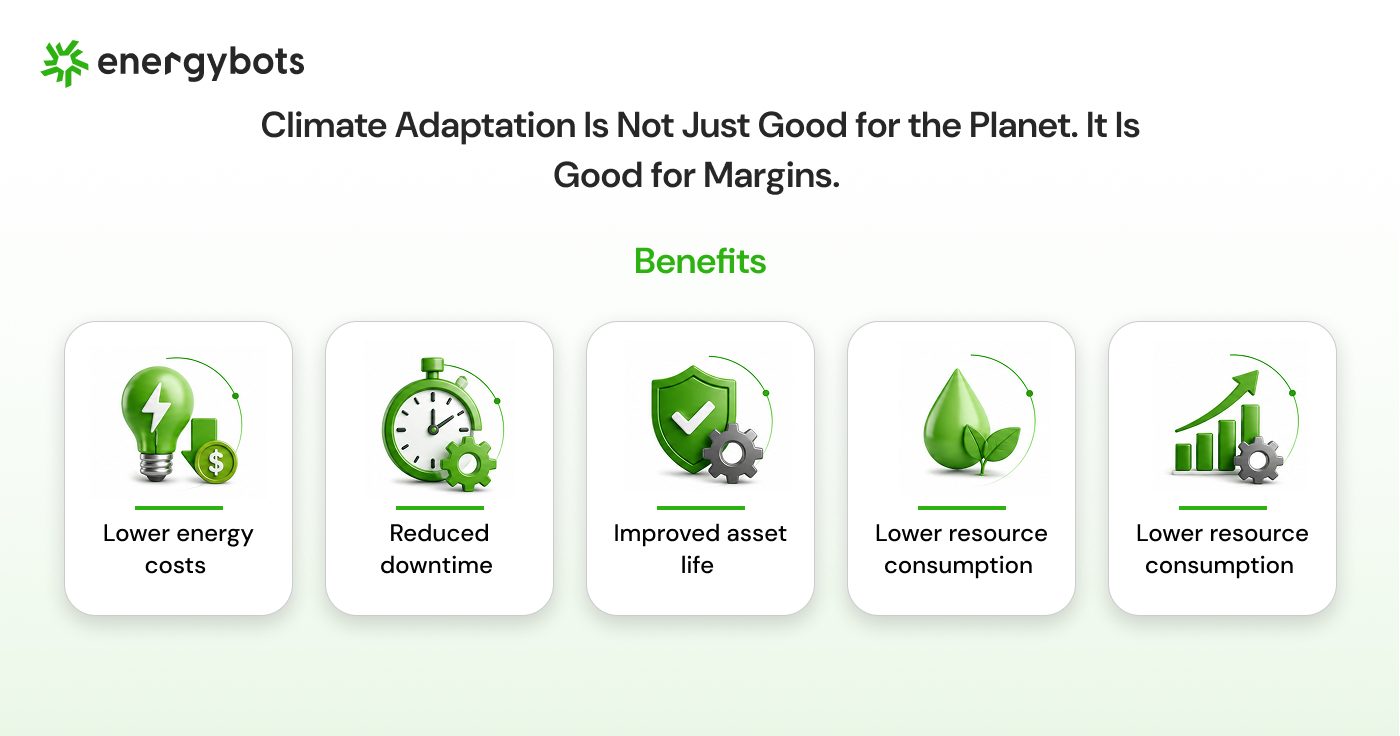
Forward-thinking manufacturers are not waiting for infrastructure to fail. They are proactively investing in heat-resilient facilities with improved ventilation, advanced cooling systems engineered for extreme temperatures, climate-resilient building materials that reduce heat absorption, flood protection infrastructure including raised flooring and drainage redesign, and distributed energy systems that maintain operations even when grid supply is disrupted.
Heat-resilient design has become especially urgent. Studies consistently show that workplace heat stress sharply reduces labour efficiency, particularly in energy-intensive manufacturing environments. A factory that loses 15–20% of its workforce productivity during peak summer months is not just an environmental problem, it is a production capacity problem and a profitability problem.
If your facilities still run on infrastructure designed for the climate of 2005, you are not operating at full potential in the climate of 2026.
You cannot manage what you cannot measure. This principle is driving a new wave of climate-focused digital transformation. Organizations increasingly rely on real-time data to improve energy efficiency, monitor emissions, identify operational risks, and support sustainability reporting.
Such organisations that invest in data-driven operations are already seeing the difference. Instead of discovering energy waste at the end of the billing cycle, they catch anomalies the moment they occur. Instead of waiting for equipment failure to disrupt production, predictive systems flag risks days in advance. Instead of estimating their carbon footprint for ESG reports, they measure it accurately in real time.
An energy monitoring system transforms how your operations respond to climate variables. When ambient temperatures spike, a smart system can automatically optimise cooling loads to reduce peak demand charges. When a machine starts consuming 18% more power than baseline, it flags a maintenance need before a breakdown stops the line. When your energy consumption data is clean, granular, and real-time, your sustainability reports stop being guesswork and start being credible strategy.
The shift from reactive to proactive management, powered by real-time data, is one of the most tangible climate change adaptation strategies available to industrial operators right now. And it pays for itself.
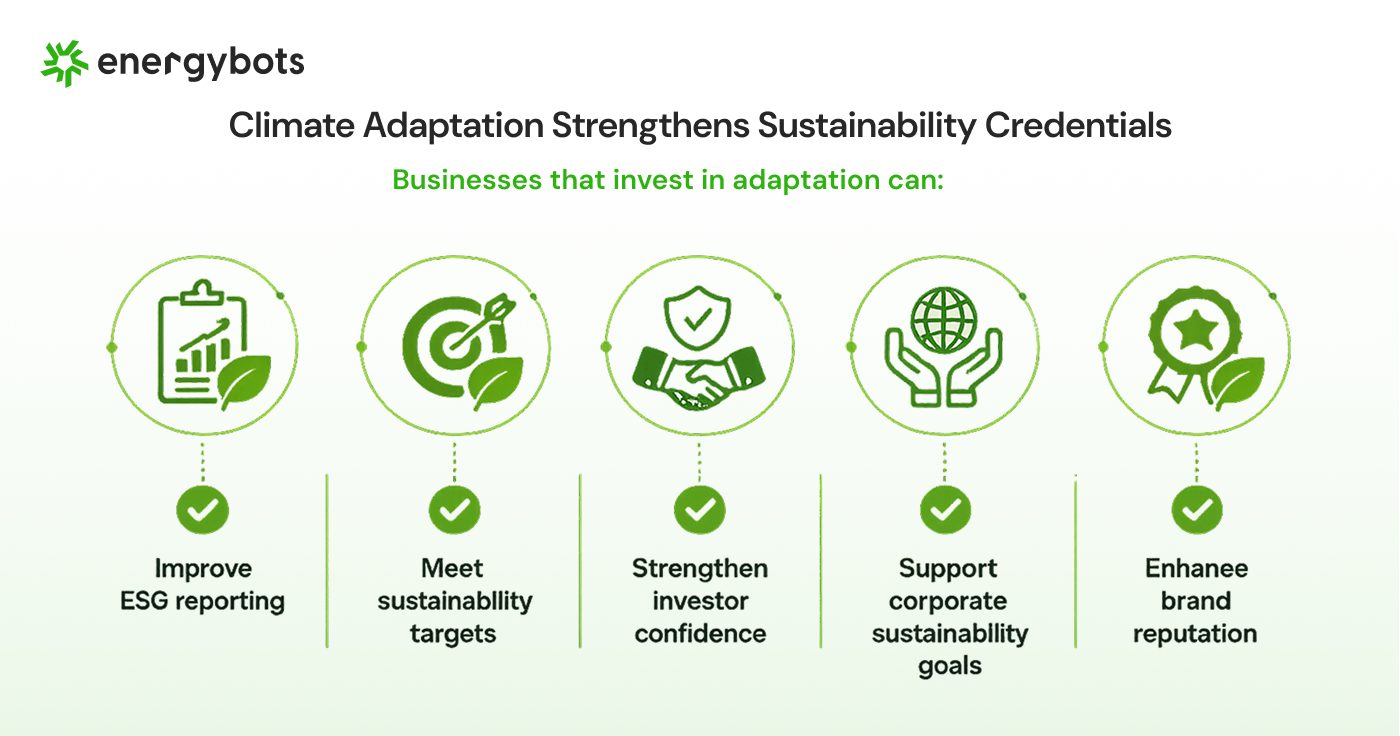
For years, sustainability was viewed primarily as a cost. That perception is rapidly changing. Today, industrial decarbonization often creates measurable business value.
Lower energy consumption reduces operating expenses. Efficient resource utilization improves margins. Sustainable supply chains attract environmentally conscious customers. Climate-resilient operations reduce business disruption. Export competitiveness is becoming another major driver. Mechanisms such as carbon border taxes are introducing new costs for carbon-intensive products entering international markets. Businesses that reduce emissions today will be better positioned tomorrow.
The market is increasingly rewarding preparedness.
Industries can no longer afford to treat climate change as a future concern. Rising temperatures, water shortages, extreme weather events, and growing energy costs are already affecting day-to-day operations across sectors. What was once considered a sustainability issue has become a business reality that directly impacts productivity, costs, and long-term growth.
In response, companies are changing the way they operate. Manufacturers are making factories more energy-efficient. Automotive companies are investing in cleaner production methods and electric mobility. Textile manufacturers are finding ways to use less water and reduce waste. Across industries, businesses are adopting technologies and practices that help them use resources more efficiently, reduce risks, and build resilience against climate-related disruptions.
Manufacturing sits at the center of the climate conversation. The sector consumes enormous amounts of electricity, fuel, water, and raw materials. Consequently, it also faces some of the highest climate-related risks.
Forward-looking manufacturers are adopting climate change adaptation strategies that focus on operational efficiency and resilience. Many factories are investing in smarter production systems that consume less energy and generate less waste. Digital monitoring, predictive maintenance, process optimization, and real-time energy tracking are becoming standard operating practices.
Manufacturers are also:
Industrial decarbonization efforts are also accelerating. Companies are replacing fossil fuel-dependent processes with electrified systems, waste heat recovery technologies, and renewable energy integration. Many facilities are redesigning production lines to improve resource efficiency while maintaining output.
This transition supports both manufacturing sustainability and profitability.
The automotive sector is undergoing one of the largest transformations in its history. Electric vehicles, lightweight materials, sustainable manufacturing processes, and circular economy practices are reshaping production strategies.
Automakers are investing heavily in renewable energy-powered manufacturing plants. Many companies have established ambitious carbon neutrality goals covering factories, supply chains, and logistics operations. Several automotive manufacturers now use artificial intelligence and digital twins to optimize energy consumption and reduce emissions during production.
For example:
Climate adaptation also extends beyond vehicles themselves. Factories are redesigning cooling systems to protect workers during extreme temperatures. Water recycling technologies are helping facilities operate in regions experiencing water stress.
The objective is to build resilient operations capable of performing under changing climate conditions.
The textile industry faces unique environmental pressures. Textile processing requires significant amounts of water and energy. Consequently, climate change directly affects production costs and resource availability. To address these challenges, textile manufacturers are adopting green manufacturing practices. Water recycling systems, low-impact dyeing technologies, rainwater harvesting infrastructure, and renewable energy integration are becoming increasingly common. Several textile companies are also redesigning supply chains to reduce transportation emissions while sourcing more sustainable raw materials.
Many leading textile manufacturers are adopting:
The result is a more resilient and environmentally responsible industry.
No discussion about climate adaptation would be complete without examining the renewable energy sector. Renewable energy is becoming the foundation of industrial competitiveness.
India has already crossed approximately 190 GW of installed renewable energy capacity, positioning itself among the world’s leading clean energy markets. This growth is helping industries reduce carbon footprint while improving energy security. Solar power, wind energy, battery storage systems, and green hydrogen are transforming how businesses source and consume energy.
For industrial operators, renewable energy provides protection against volatile fuel prices and future carbon regulations. More importantly, it offers long-term cost predictability.
Climate change is redefining how industries operate. Heatwaves in India is influencing energy consumption, infrastructure planning, supply chain design, workforce management, investment decisions, and customer expectations.
The organizations succeeding today are not waiting for regulations to force action. Instead, they are proactively implementing climate change adaptation strategies that strengthen resilience, improve efficiency, and create long-term value.
This World Environment Day 2026, climate adaptation should not be viewed as an environmental obligation. It should be viewed as a business opportunity. The industries that embrace industrial sustainability, manufacturing sustainability, green manufacturing, and industrial decarbonization today will be the industries shaping tomorrow’s economy.
The future belongs to organizations that can adapt faster than the challenges they face.

Climate adaptation starts with visibility. Energy Bots helps industries move from reactive energy usage to proactive energy management through its intelligent Energy Monitoring System (EMS). By providing real-time insights into energy consumption, demand patterns, peak loads, and inefficiencies, EMS helps businesses reduce energy costs, improve operational efficiency, support corporate sustainability goals, and accelerate industrial decarbonization.
Beyond energy, Energy Bots also addresses water conservation through Flosenso, its smart water management solution. Flosenso helps automate water management, prevent tank overflows, reduce wastage, and optimize water usage. Together, EMS and Flosenso enable organizations to build smarter, more efficient, and climate-resilient operations where every unit of energy and every drop of water counts.
Schedule a free consultation with Energy Bots today, to discover your energy saving potential.