You type a prompt.
Within seconds, you receive a response. Clear, structured, and intelligent. It feels effortless.
However, behind that simplicity lies a physical cost that is hidden from the naked eyes.
Water.
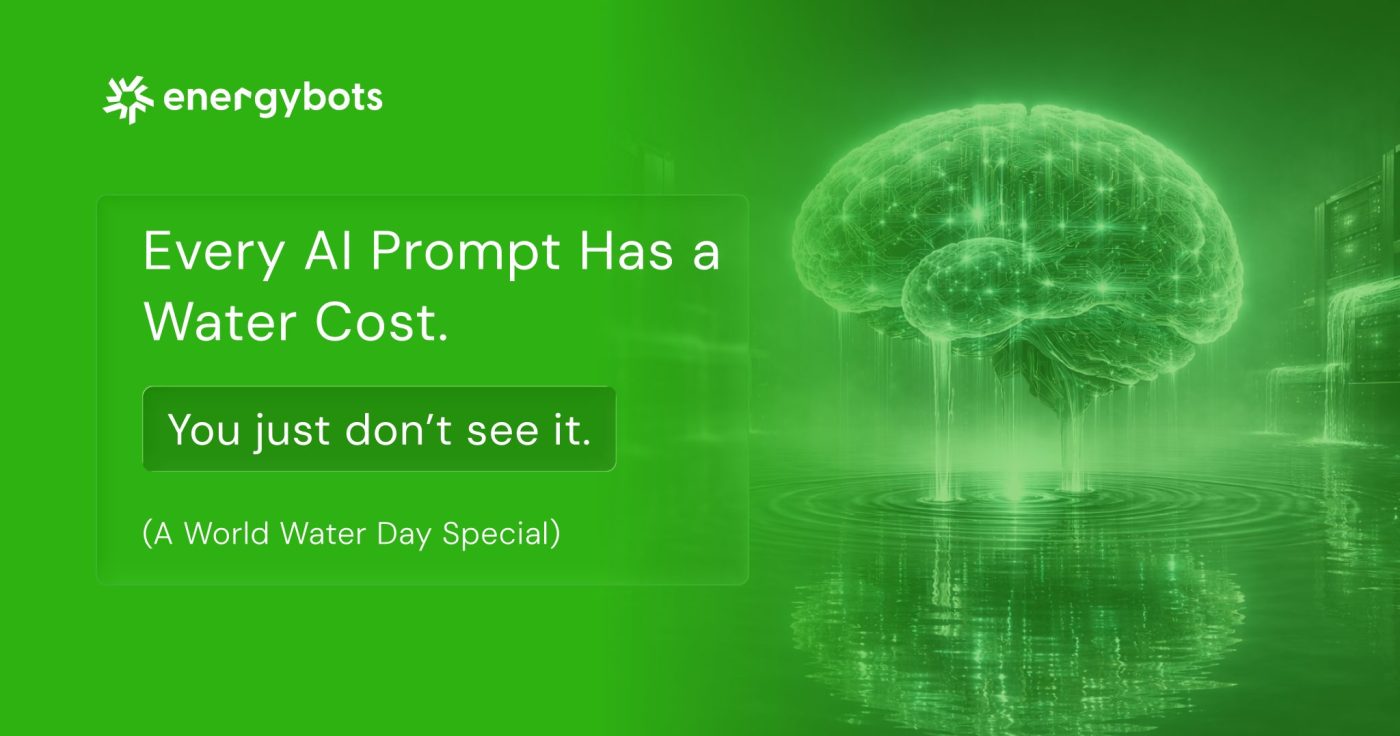
On World Water Day, it is time to look beyond the interface and understand the infrastructure. Because artificial intelligence is not just software. It is a system powered by energy, hardware, and increasingly, water.
Global estimates suggest that AI systems consume between 312 billion and 764 billion liters of water annually. By 2027, water withdrawal linked to AI could reach 4.2 to 6.6 billion cubic meters.
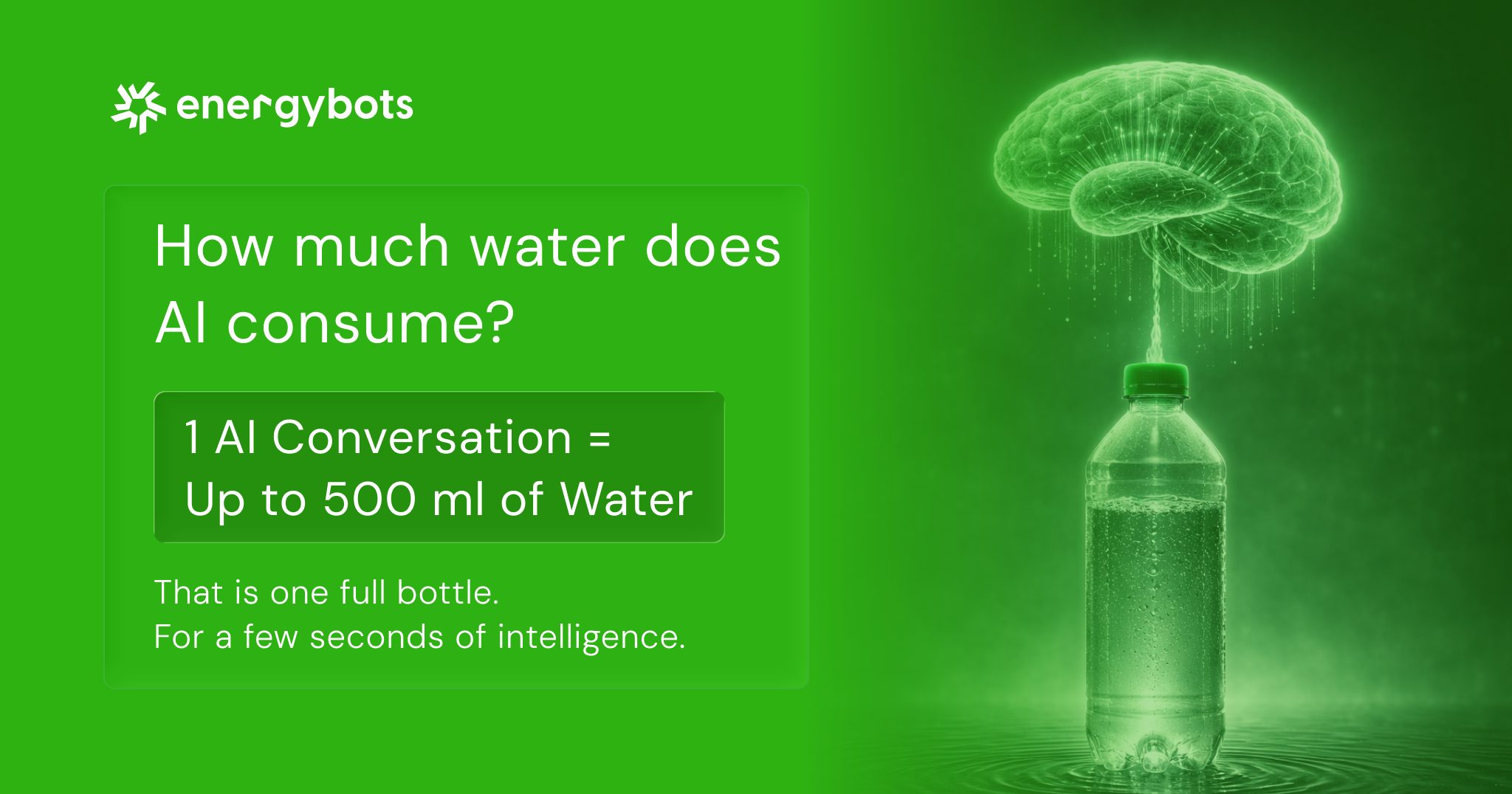
However, a typical AI prompt uses anywhere between a few milliliters to around 500 milliliters of water, depending on several factors. In efficient systems, the usage may be as low as a few drops. In standard conditions, it usually ranges between 2 ml and 40 ml per prompt. In less efficient environments, a short AI conversation can consume up to half a liter of water. Estimates vary by model; one study indicates that 1,000 GPT-5 prompts could consume 100–160 liters of water. This variation is important. It shows that AI water consumption is not fixed. Instead, it depends on infrastructure, energy sources, and operational efficiency.
It may seem insignificant for a single prompt. However, when scaled across billions of interactions, the impact becomes substantial. With global data center water consumption projected to reach 1.2 trillion liters by 2030, this usage poses a strain on regions facing water shortages.
Artificial intelligence does not directly consume water. Instead, the systems supporting it do. The total water usage of AI does not come from a single source. It is distributed across multiple layers of the entire technology ecosystem, each contributing in its own way. AI should be understood as a multi-layered water consumer, with both direct and indirect impacts that extend far beyond a single prompt.
A single large data center can consume up to 5 million gallons of water per day, which is equivalent to the water needs of a small town. As AI adoption grows across industries, this demand will continue to rise. Driven by AI demand, Google and Microsoft reported annual water consumption increases of 20% and 34%, respectively, in their latest environmental reports.
But why is this water consumed? Every AI request sets off a complex chain of computations inside large data centers. These facilities house thousands of high-performance servers operating continuously at extreme processing intensity. As a result, they generate enormous amounts of heat.
To maintain optimal performance and prevent system failure, this heat must be managed in real time. This is where cooling becomes critical. Data centers rely on advanced cooling mechanisms such as cooling towers, chillers, and evaporative systems. In many cases, water is used as the primary medium to absorb and carry away heat.
However, this process comes with a trade-off. A significant portion of the water used in these systems evaporates during cooling. Once evaporated, it is effectively removed from the local water cycle and is not immediately available for reuse.
This continuous cycle of heat generation and water evaporation is what makes data center cooling systems one of the most significant contributors to AI’s overall water footprint.
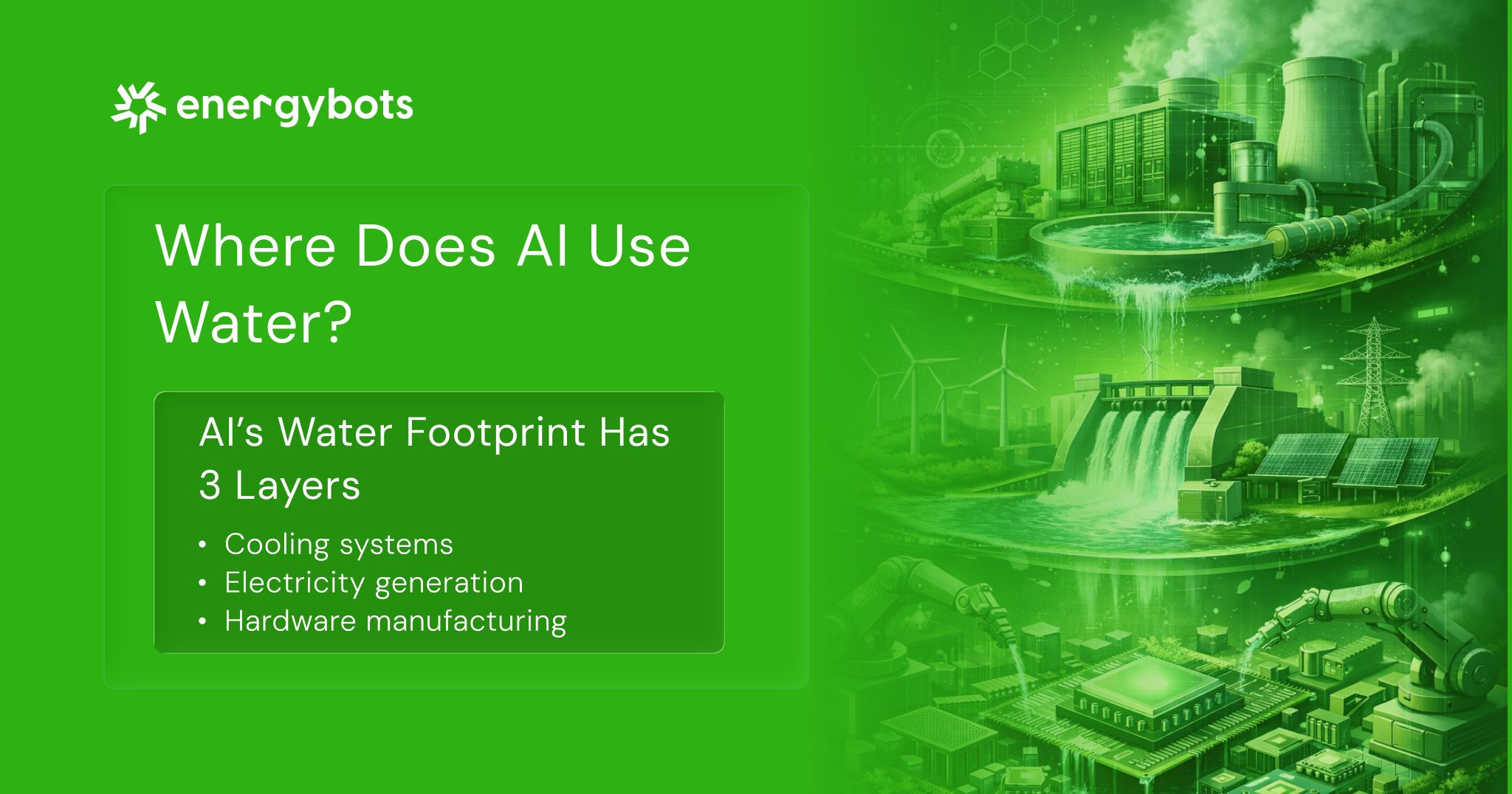
The story does not end with cooling. AI systems require electricity. And electricity generation often depends on water. Thermal power plants use water for cooling and steam generation. Hydropower leads to evaporation from reservoirs. Even nuclear energy relies heavily on water-based cooling.
As a result, every AI prompt has an indirect water footprint tied to the energy required to power it. This is why discussions around AI impact on environment must include both direct and indirect water consumption.
The third layer lies in hardware manufacturing, which is the most invisible yet highly resource-intensive component. Before an AI model answers your first question, its hardware has already consumed water. The semiconductor chips used in AI servers are manufactured using ultra-pure water in massive quantities. Each chip can require thousands of liters during production, and large data centers contain tens of thousands of such components. This means that even before an AI system processes its first request, a substantial amount of water has already been consumed in building the infrastructure.
When you look at these layers together, it becomes clear that AI is not just a user of water at the point of interaction. It is embedded within a broader system where water is consumed at every stage, from production to operation.
AI water usage changes depending on multiple variables. Location plays a critical role. Data centers in cooler regions can rely more on air cooling, reducing water usage. In contrast, facilities in hotter climates depend heavily on evaporative cooling.
Energy mix also matters. Data centers powered by renewable sources like wind and solar have a much lower water footprint compared to those relying on fossil fuels.
Timing adds another dimension. During peak heat or high demand periods, cooling systems consume more water. This variability highlights an important insight, that AI’s water footprint can be optimized.
AI systems are becoming more efficient. New models require less energy. Cooling technologies are improving. Yet, total water consumption continues to increase.
This happens because AI adoption is growing faster than efficiency gains. As more businesses integrate AI into operations, the cumulative demand on infrastructure rises.
Major technology companies have already reported significant increases in water usage, reflecting this trend.
This creates a clear challenge.
For industrial leaders and IT decision-makers, AI is becoming a core part of operations, analytics, and decision-making. At the same time, sustainability expectations are rising. Investors, regulators, and stakeholders are demanding greater transparency.
ESG Reporting Tools must evolve on this. Most organizations track carbon emissions and energy consumption. Very few track water usage in digital operations. However, water is a critical resource. It is local, limited, and directly impacts communities.
AI is not yet the largest consumer of water globally. Agriculture, manufacturing, and residential usage still dominate. However, AI is one of the fastest-growing contributors. Its exponential adoption across industries makes it a critical factor in future water demand. This is why understanding AI water consumption is essential for long-term sustainability planning.
To align AI adoption with sustainability goals, businesses must:
The industry already has solutions to reduce water usage. Advanced cooling technologies, such as immersion cooling and closed-loop systems, can significantly lower water consumption. These systems minimize evaporation and improve efficiency. AI itself can also contribute. By optimizing workloads and improving efficiency, AI can reduce the resources required for computation.
Energy choices play a crucial role as well. Renewable energy sources like solar and wind require minimal water, reducing indirect consumption. When combined with IoT energy management, organizations can gain better control over resource usage and improve overall efficiency.
A single AI prompt may use only a small amount of water. However, at scale, AI becomes a significant consumer of one of the planet’s most limited resources. Understanding this hidden footprint is the first step toward managing it.
As we reflect on World Water Day, one insight becomes clear. AI’s water footprint is not just a water problem. It is fundamentally an energy problem. Because every drop consumed in data centers is closely tied to how energy is generated, distributed, and used. Cooling systems depend on electricity. Power plants depend on water. And inefficient energy usage directly amplifies water consumption.
This World Water Day 2026, we need to rethink how to approach AI. The focus should move beyond performance and scalability. It should include, resource efficiency, environmental impact, long-term sustainability.
Because the future of AI will not be defined only by innovation. It will be defined by responsible innovation.
Yes, rising energy costs and poor energy management can significantly impact profits by increasing operational expenses and potentially leading to missed opportunities for cost savings and efficiency improvements. Energy management practices, such as monitoring and optimizing energy consumption, can help businesses reduce these costs and improve profitability.
Margins are thin. Markets are competitive. Energy isn’t getting cheaper. But is it your smartest move? Start saving energy. You don’t need a massive overhaul. Just start with small changes, turning off idle machines, upgrading lights, fixing leaks. Build from there with smart monitoring, better equipment, and automation.
Your future-ready plant isn’t built overnight. But it starts with a single switch. So, what are you waiting for?
If you want to reduce AI water consumption, you must first optimize energy. Energy Bots enables organizations to gain real-time visibility into their energy usage through advanced energy monitoring system solutions. By tracking consumption at machine and process levels, businesses can identify inefficiencies, eliminate energy waste, and optimize operations.
With the integration of IoT energy management, Energy Bots allows industries to move from reactive monitoring to proactive control. It enables smarter decision-making, better load management, and optimized performance across operations.
More importantly, Energy Bots supports businesses in aligning with modern sustainability frameworks through better ESG Reporting Tools and structured energy audit and management practices. This ensures that energy efficiency is not just an operational goal, but a measurable ESG outcome.
On World Water Day 2026, this connection becomes more important than ever.
Because the future of sustainability will not be solved by addressing water and energy in isolation. It will be solved by managing them together.
Energy efficiency is no longer just about reducing costs. It is about conserving resources. It is about reducing environmental impact. It is about building systems that are intelligent, efficient, and responsible. And that is the shift businesses need to lead.
Connect with Energy Bots to reduce your carbon footprint and get energy efficient.