Energy costs dominantly affect operating budgets, production planning and facility decisions. Yet in many organizations, energy information is often concerned with utility bills, meter readings and separate site reports. When teams cannot see how consumption changes across processes or locations, it becomes harder to identify priorities or determine whether an efficiency measure is working.
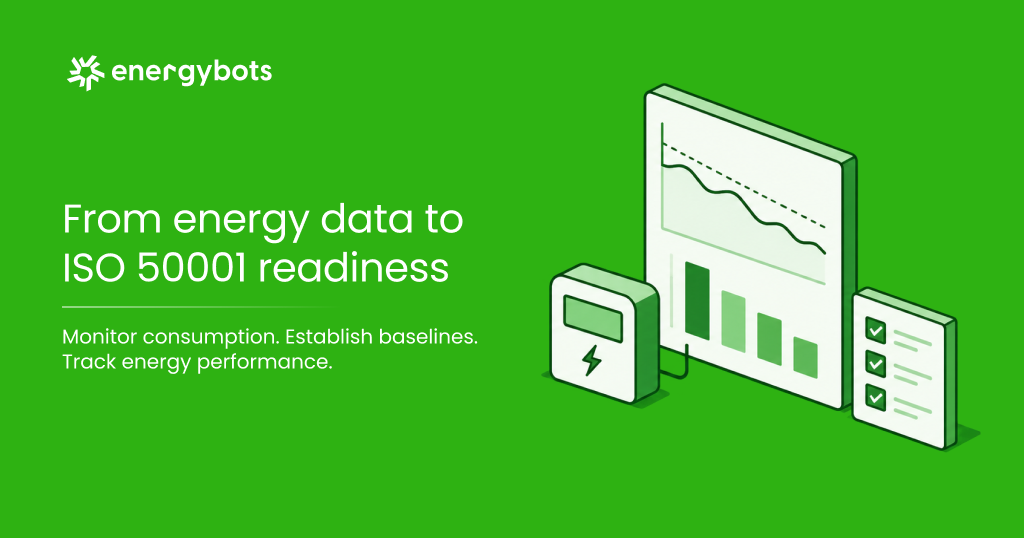
ISO 50001 gives organizations a framework for establishing, implementing and continually improving an energy management system (EnMS). Energy monitoring can support that work by making energy use easier to measure, compare and review. It gives decision-makers a clearer evidence base for setting priorities and tracking progress. The current standard is ISO 50001: 2018, with a 2024 climate action amendment.
Let us explore what are the certification guidelines and how energy monitoring helps companies prepare for ISO 500001.
An energy monitoring system collects and organizes information about energy use. Teams can use this data to identify significant energy uses, establish relevant baselines and performance indicators, and check whether improvement actions are delivering results. Monitoring supports ISO 50001 preparation, but certification depends on the organization’s complete energy management system and an independent audit.

ISO 50001 certification is not a certificate for a meter, dashboard or software product. It concerns how an organization manages energy performance through a defined system. The organization needs to understand its energy use, set appropriate objectives, assign responsibilities, put relevant controls in place, evaluate performance and keep improving its approach.
Monitoring helps provide evidence for some of these activities, but it is only one part of the work. Leadership commitment, staff awareness, operational practices, documented processes and regular reviews all matter. ISO describes ISO 50001 as a systematic framework for improving energy performance, including energy efficiency, energy use and consumption. Certification is optional, and ISO itself does not issue certificates; independent certification bodies conduct audits.
Utility bills are useful for understanding overall costs and consumption, but they may not show what is happening inside a site. More frequent readings can help energy and operations teams see how consumption varies by equipment, process, shift, building or location. This makes it easier to decide where a closer review may be worthwhile.
For example, a facility may notice that demand rises during a particular operating period, or that a process consumes more energy than expected. The data does not automatically explain why. Teams need to compare the readings with production schedules, equipment conditions, occupancy, weather or other relevant factors before deciding what action to take.
This is where an energy monitoring system can support the organization’s energy review. It can help teams locate areas for investigation, compare patterns over time and bring relevant readings into one view. Better visibility can make energy decisions more consistent across sites, especially when teams use common reporting practices.

An energy baseline is a reference point that an organization uses to compare energy performance over time. An energy performance indicator (EnPI) is a measure chosen to track performance against a relevant activity or condition. ISO 50006:2023 provides guidance on establishing and maintaining EnPIs and energy baselines, and on using them to evaluate and monitor energy performance.
The right indicator depends on the organization. A manufacturer might track energy consumed per unit produced. A warehouse could monitor energy use per square metre or per operating hour. A company with several sites may compare peak demand by facility or review consumption across similar operating periods.
The goal is to select measures that help the organization understand its own performance. A simple comparison of total monthly consumption may be misleading if production volumes, operating hours or other relevant conditions changed. Teams should document the context they use when interpreting results and apply it consistently. Monitoring then helps them compare current readings with the baseline and see whether performance is moving in the intended direction, while supporting carbon footprint reduction.
Energy audit services and continuous monitoring play different but related roles. An energy audit can assess how a building, process or item of equipment uses energy and identify areas for further analysis or possible improvement. Monitoring provides ongoing information that helps teams understand patterns and review the effect of actions after implementation.
A practical energy audit and management cycle might begin with a review of bills and meter data. The team can use that review to select priority areas for an audit or technical assessment. It can then evaluate recommendations against operational needs, cost and expected impact, assign responsibility for approved actions, and monitor relevant energy use afterward.
This connects energy conservation and audit work with day-to-day operations. Instead of treating an audit as a standalone report, the organization can use its findings to inform objectives, operational controls and follow-up reviews. Monitoring data can show where further investigation is needed, while qualified energy professionals can assess technical causes and suitable measures.
Monitoring can help organizations examine particular aspects of energy performance. The information should guide investigation, rather than automatically trigger a technical recommendation.
Demand-side management starts with understanding when energy demand rises and what operational conditions coincide with those periods. With that view, teams can assess whether schedules, equipment sequencing or other operational changes may be practical. Any change should be reviewed for its effect on production, service levels and equipment requirements.
Power factor readings can also help identify conditions that deserve attention. Where an assessment shows it is appropriate, power factor correction may be considered as an engineering measure. It is not a universal solution, and organizations should base decisions on their electrical system and the advice of qualified professionals.
For facilities teams, energy monitoring can support building energy efficiency reviews by showing consumption patterns across buildings or operating periods. Power quality monitoring can help surface electrical conditions for further technical analysis. In both cases, teams need to consider equipment, occupancy and operating context before choosing corrective action.
Energy management software can bring readings from supported meters and data sources into dashboards, alerts and reports. This can help teams review consumption across sites, identify selected conditions for follow-up and keep energy performance information accessible to the people responsible for it.
When evaluating platforms, organizations should consider meter coverage, data quality, monitoring frequency, integration needs, site-level reporting and the measures they want to track. They should also ask how the system will support their internal review process and who will maintain the data and respond to alerts.
Organizations comparing energy management systems companies should assess the provider’s technical experience, implementation approach, support and ability to work with the organization’s existing infrastructure. A provider or software platform can support an EnMS, but neither replaces management commitment, operational controls or an independent certification audit.
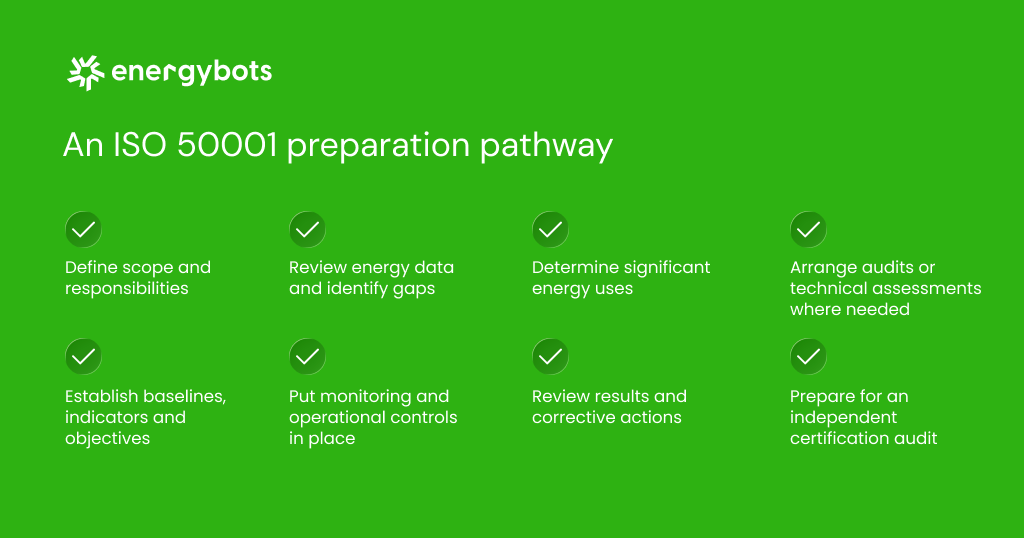
Each organization will have a different starting point, but these steps can help structure preparation:
This is a general preparation sequence, not a substitute for reviewing the current ISO standard or seeking qualified advice. Certification bodies assess the organization’s management system, not the presence of a particular software tool.
Energy performance is often part of a wider corporate sustainability program. Reliable energy data can help an organization understand consumption and identify where operational decisions may support carbon footprint reduction. However, monitoring alone does not reduce emissions. Outcomes depend on the actions taken and factors such as the energy sources used.
When organizations connect energy information with clear responsibilities and regular reviews, they can make sustainability reporting and internal decision-making more evidence-based. The same information can help teams assess whether energy objectives remain relevant as operations change.
Energy monitoring helps companies prepare for ISO 50001 by making energy use easier to understand and review. Its value comes from connecting data with audits, operational decisions, clear responsibilities and regular evaluation. When an organization uses monitoring as part of a complete energy management system, it can make more informed choices and track whether its actions are improving energy performance.

Energy Bots EMS provides visibility into energy parameters such as kWh, kVAh, current, power factor, voltage and frequency. Its capabilities include real-time monitoring, alerts, peak-load visibility, multi-site dashboards and reports. These functions can help teams review energy use and track selected measures across facilities.
As part of a broader ISO 50001 implementation, this information can support energy performance tracking and internal reviews. The organization still needs to define its energy management processes, act on findings and prepare for the independent audit. Energy Bots EMS supports energy visibility; it does not provide ISO 50001 certification or guarantee that an organization will receive it.
To explore how energy monitoring could improve visibility across your facilities, speak with Energy Bots about your energy data, operational needs and reporting priorities.
It can support preparation by helping an organization understand energy use, track selected indicators and review performance over time. Certification requires the organization to establish and operate a complete energy management system and undergo an independent audit.
The organization must meet the standard’s energy management requirements, but it should not assume that a particular software platform is required. Software can help collect and review information; the organization remains responsible for its processes, controls and continual improvement.
An EMS can provide energy data and may display estimated carbon indicators when appropriate emission factors are applied. However, it does not automatically provide statutory CCTS verification. Formal compliance follows BEE’s applicable MRV procedures and accredited verification requirements.
It can help facilities teams see consumption patterns and identify areas for investigation. Improvements depend on the measures selected and how effectively they are implemented and reviewed.
Organizations choose tools suited to their operations and energy management needs. A specific monitoring brand does not itself establish ISO 50001 conformity or guarantee certification.