Every month, EV charging station owners open their electricity bills with the same sense of uncertainty. Despite steady utilization and no major operational changes, the numbers often don’t make sense. Bills jump by 20–30%, even when charging sessions remain largely the same.
Many owners track their estimated consumption, say around 11,000 kWh, but receive estate bills showing 14,000 kWh or more. A difference of a few thousand units isn’t a small error. It’s a costly gap with no clear explanation.
And this is a common story across the industry. EV charging station owners everywhere face unpredictable bills, unexplained fluctuations, and a complete lack of visibility into what’s really happening behind the meter.
Most new operators assume that once chargers are installed and connected, the business will run itself. But EV charging infrastructure behaves very differently from typical commercial loads.
A single DC fast charger draws 60–120 kW instantly. Ultra-fast chargers in Europe and the US draw up to 350 kW, which is equivalent to the peak load of nearly 80 homes. In India, energy costs can form 65–70% of the monthly operating expense of an EV charging station.
Yet, despite such heavy power consumption, a large percentage of station owners still operate without any energy monitoring system, without smart load management, and without understanding their own consumption patterns.
The result is a business that looks promising on paper but struggles in reality.
EV charging stations located inside malls, tech parks, societies, and commercial complexes usually rely on shared electrical infrastructure. Instead of receiving bills directly from the DISCOM, station owners receive consolidated internal bills from estate owners.
This is where things often break. Studies show that 42% of EV charging stations inside commercial complexes experience billing mismatches due to mixed loads, inaccurate sub-metering, or errors in allocation. In many cases:
Without independent monitoring, operators simply accept whatever number they are billed.
This leads to unexpected spikes.
Most EV charging station owners focus on uptime, customer traffic, and charger performance. But few realize how deeply power quality affects their business.
Voltage fluctuations, low power factor, and harmonics can:
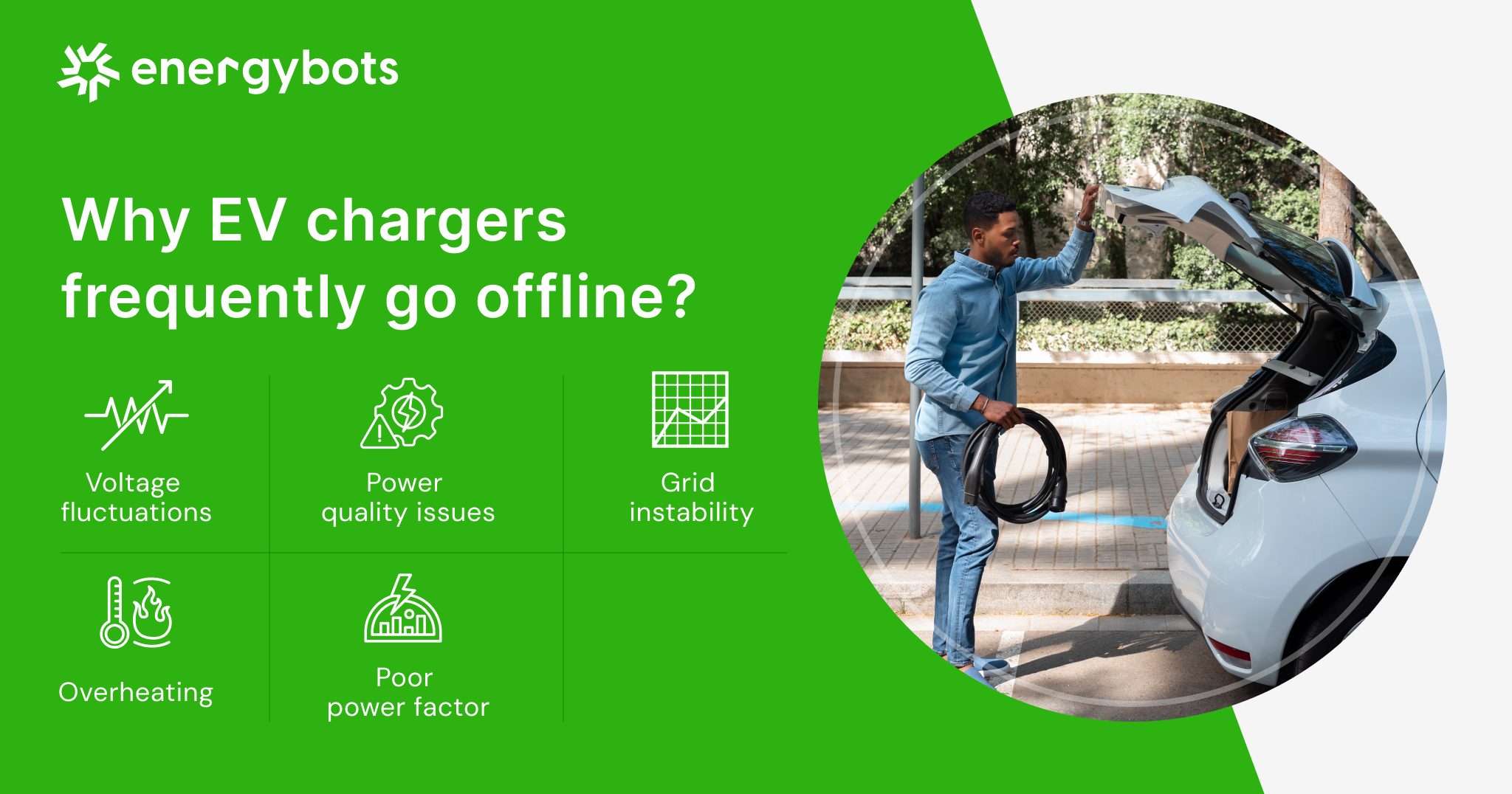
According to the International Energy Agency (IEA), poor power quality can reduce charging speed by 10–30% and cause 20% higher maintenance events. In India’s urban energy grids, voltage dips are extremely common during peak hours, especially evenings.
When a charger slows down due to voltage instability, customers blame the station, not the grid. This directly affects utilization and repeat footfall.
Even if kWh consumption is steady, a single sudden spike in load, caused by two chargers activating simultaneously, can trigger demand charges that persist for the entire month.
Demand charges can contribute 18–35% of the total electricity bill for EV charging stations.
The issue intensifies when:
Without monitoring, owners have no way to predict or control these spikes. They only see the impact at the end of the month.
Across India, Europe, and Southeast Asia, a pattern is emerging. EV charging stations that struggle the most are those that:
In simpler words, they operate blind. And blind businesses leak money, often without realizing it.
Across the EV charging industry, one issue consistently emerges once stations begin monitoring their energy use: peak load spikes. Many EV charging stations discover that multiple DC chargers often draw maximum power at the same time, typically during evening rush hours, creating sudden, sharp peaks in electricity demand.
These peaks aren’t harmless. They trigger demand charges, which can make up 18–35% of a station’s monthly electricity bill in India. Studies also show that smart load balancing can reduce these spikes by 20–30%, while stations using automated load control typically save 11–14% on their bills within the first quarter.
When power distribution is controlled intelligently, peak loads flatten, demand charges drop, chargers stop tripping, and charging speeds stabilize. This leads to predictable operations, better customer experience, and higher repeat usage.
For many EV charging station owners, this is the point where the business finally starts feeling stable, no longer a guessing game, but a system driven by data and control.
When operators adopt an energy monitoring system, the transformation is dramatic and immediate.
For the first time, they can see:
Once this data becomes visible, everything changes.
Billing disputes become solvable because operators have independent, validated reports. Demand spikes become manageable because load can be balanced intelligently. Power factor penalties reduce because correction becomes possible. Downtime drops because voltage dips and abnormalities are detected early. Charging speed stabilizes, which directly improves customer experience.
In markets like the US and EU, charging networks that use energy intelligence report 12–20% lower electricity bills and 25–35% lower downtime within the first year.
It’s not pricing errors.
It’s not slow customer adoption.
It’s not lack of location research.
It’s not competition.
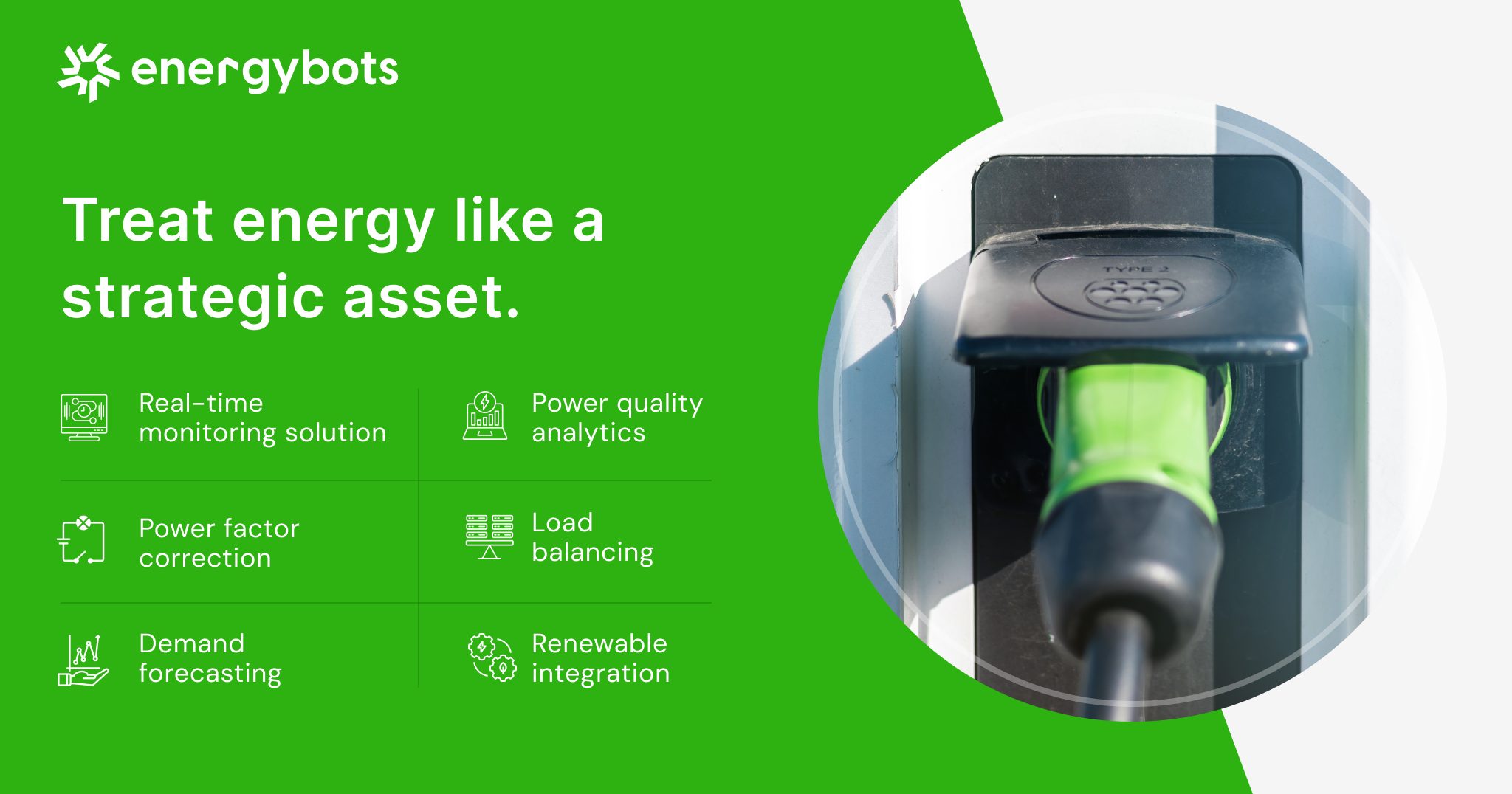
The biggest mistake is running a high-capacity energy business without energy monitoring.
EV charging station owners assume that hardware determines profitability. But hardware only enables charging. It doesn’t manage cost, prevent inefficiencies, or identify wastage.
The real profitability unlocks when owners understand that:
Without energy intelligence, station owners simply hope the numbers add up every month. With energy intelligence, they finally understand why they add up, and what to fix.
As EV adoption accelerates, the charging station business will grow rapidly across India and the world. But the stations that succeed will not be the ones with the most chargers or the best locations. They will be the ones that take ownership of their energy, the ones who track, monitor, and optimize the invisible layer that controls their entire operating model.
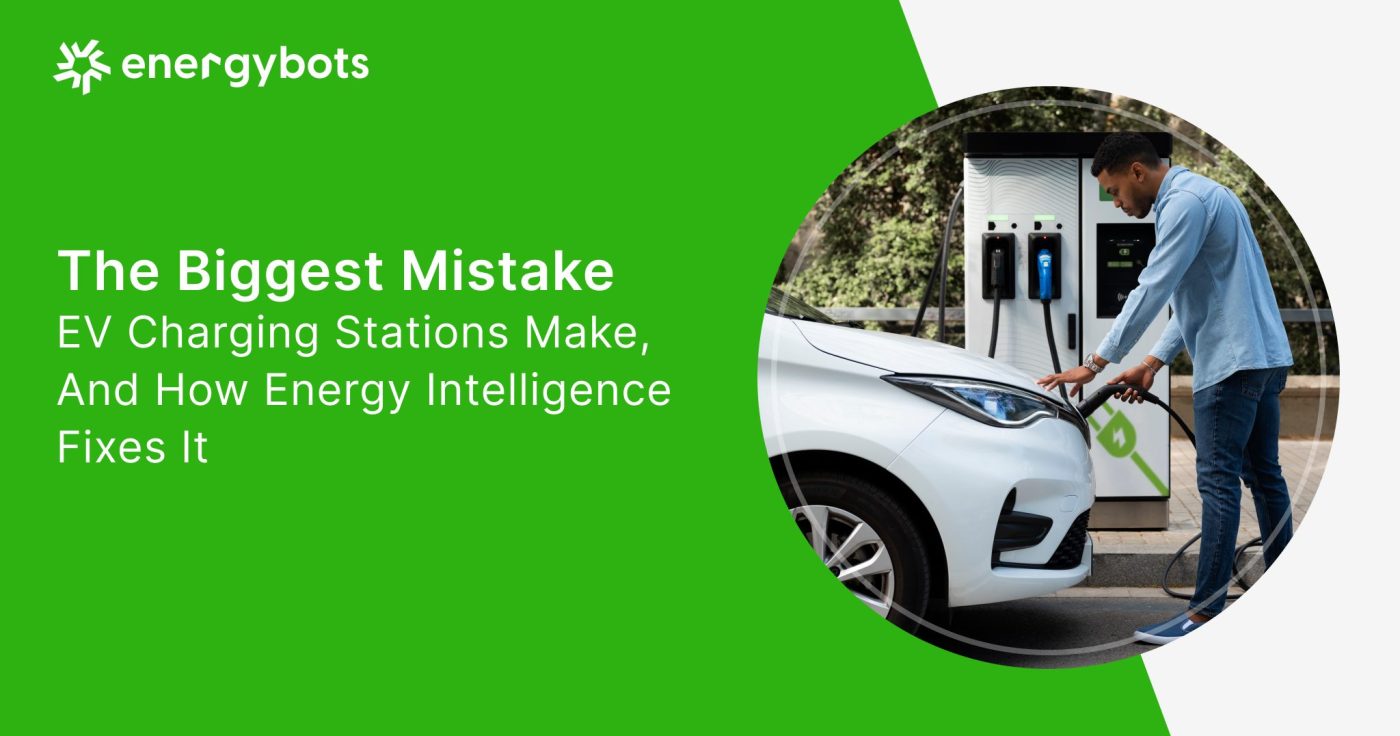
The biggest mistake EV charging station operators make is ignoring energy intelligence. Once this mistake is fixed, every other part of the business, uptime, customer satisfaction, profitability, and ROI, improves naturally.
Energy Bots brings powerful, real-time energy intelligence to EV charging stations. With our energy monitoring system, operators can finally see every kWh consumed, reconcile bills with estate owners, manage load intelligently, enforce power factor correction, detect voltage issues early, and significantly reduce both energy cost and downtime.
Our platform ensures your EV charging station management becomes transparent, stable, and scalable. Whether you run a single station or a multi-city network, Energy Bots gives your business the clarity and control it needs to grow profitably in the fast-changing EV landscape.
Plus, our solutions integrate seamlessly into your existing setup without disruptions, or any major learning curve.
Schedule a free consultation with Energy Bots today, to discover your energy saving potential.